Unified
Portals
Designing a shared platform experience across Aeropay’s Merchant, Admin, and internal Aerosync portals, with a focus on platform strategy, personas, and scalable product systems.
Aeropay’s product suite spans bank linking, pay-by-bank checkout, instant payouts, and AI risk prevention. As the suite expanded, the dashboards around it had grown separately: a merchant portal for clients, an admin portal for risk and fraud monitoring, and an internal portal for merchant management. Analytics reporting also depended on Metabase.
Each dashboard served a real need, but they were built at different times, for different users, without a shared foundation. By the time this initiative started, Aeropay needed a more unified way to support merchants, internal teams, and the systems that connected them.
The fragmentation showed up differently depending on the user. Merchants relied on Aeropay for performance reports. Solutions Engineers jumped between tools to configure widgets, billing, and submerchants. Internal teams used separate systems to monitor risk, manage merchants, and support clients. Users had to move between tools to find the information and context their workflows required.
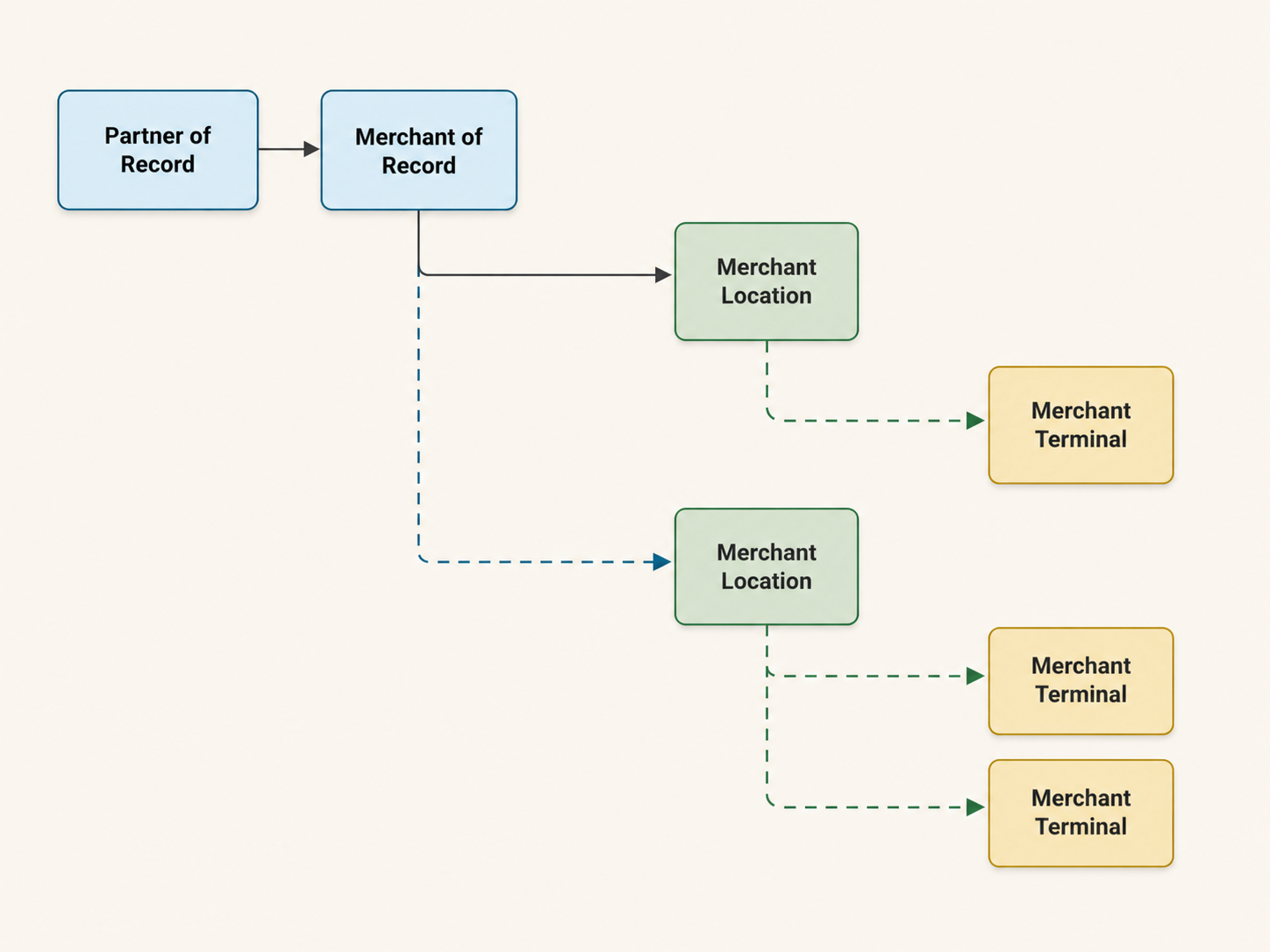
There was also a deeper structural challenge. A separate initiative, Universal Merchant, was redefining how Aeropay models merchant relationships: Partner → Merchant → Submerchant → Terminal. That model did not exist in the current portals, but the new experience needed to be designed around it.
This work needed to solve a few connected challenges:
- Unify 3 Aeropay portals: Merchant, Admin, and internal Aerosync.
- Deliver native analytics and self-service reporting in the existing Merchant Portal while designing the broader platform.
- Reduce Metabase-dependent reporting requests and the manual work needed to fulfill them.
- Support merchant-facing and internal workflows through a role-based platform experience.
- Design around a new merchant hierarchy that could support everything from single-location merchants to multi-brand partners.
I began defining the platform scope with Engineering before a dedicated PM joined. I then rebuilt the persona framework across merchant and internal roles, clarifying responsibilities, access needs, and workflows that informed the shared platform experience.
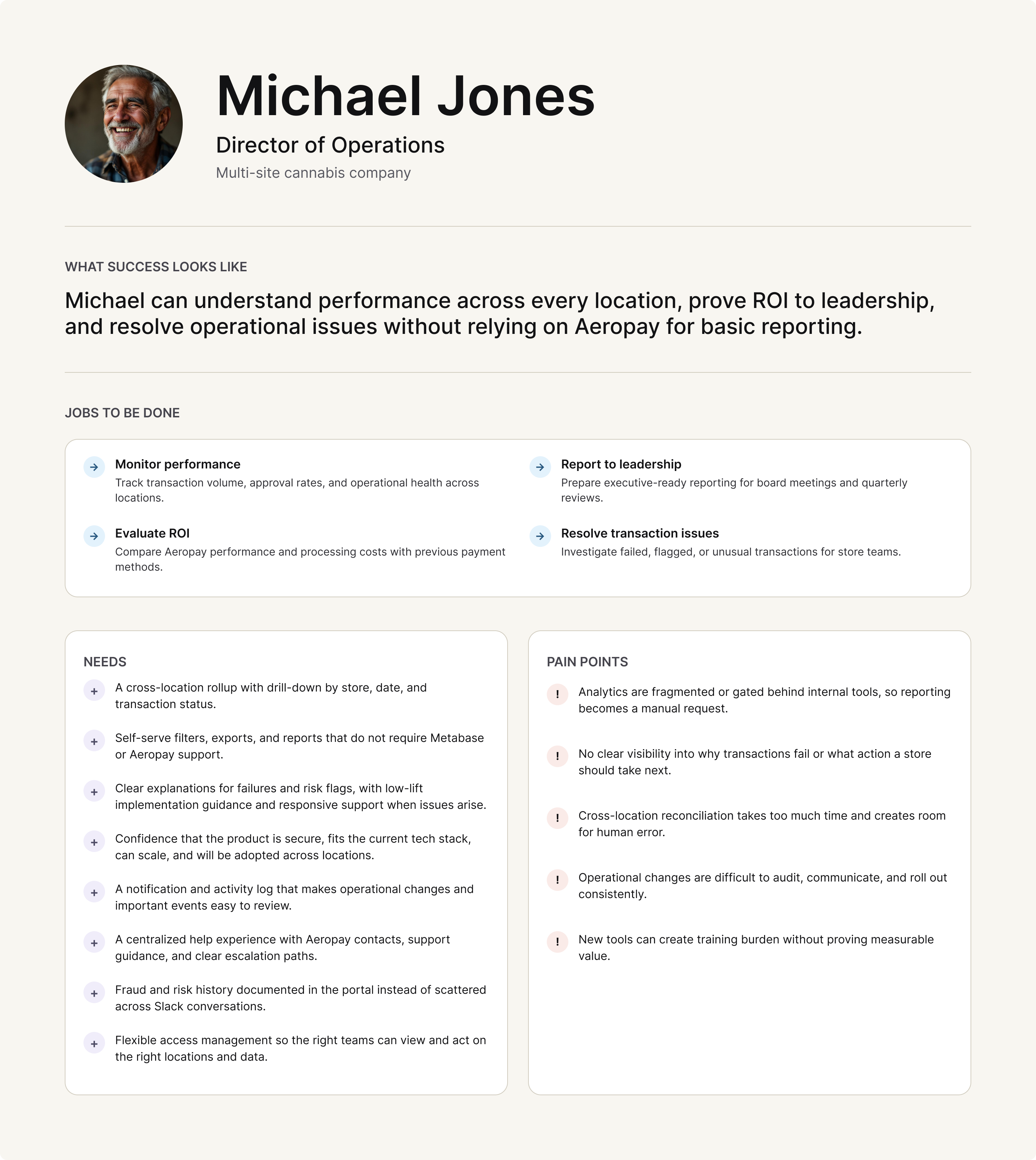
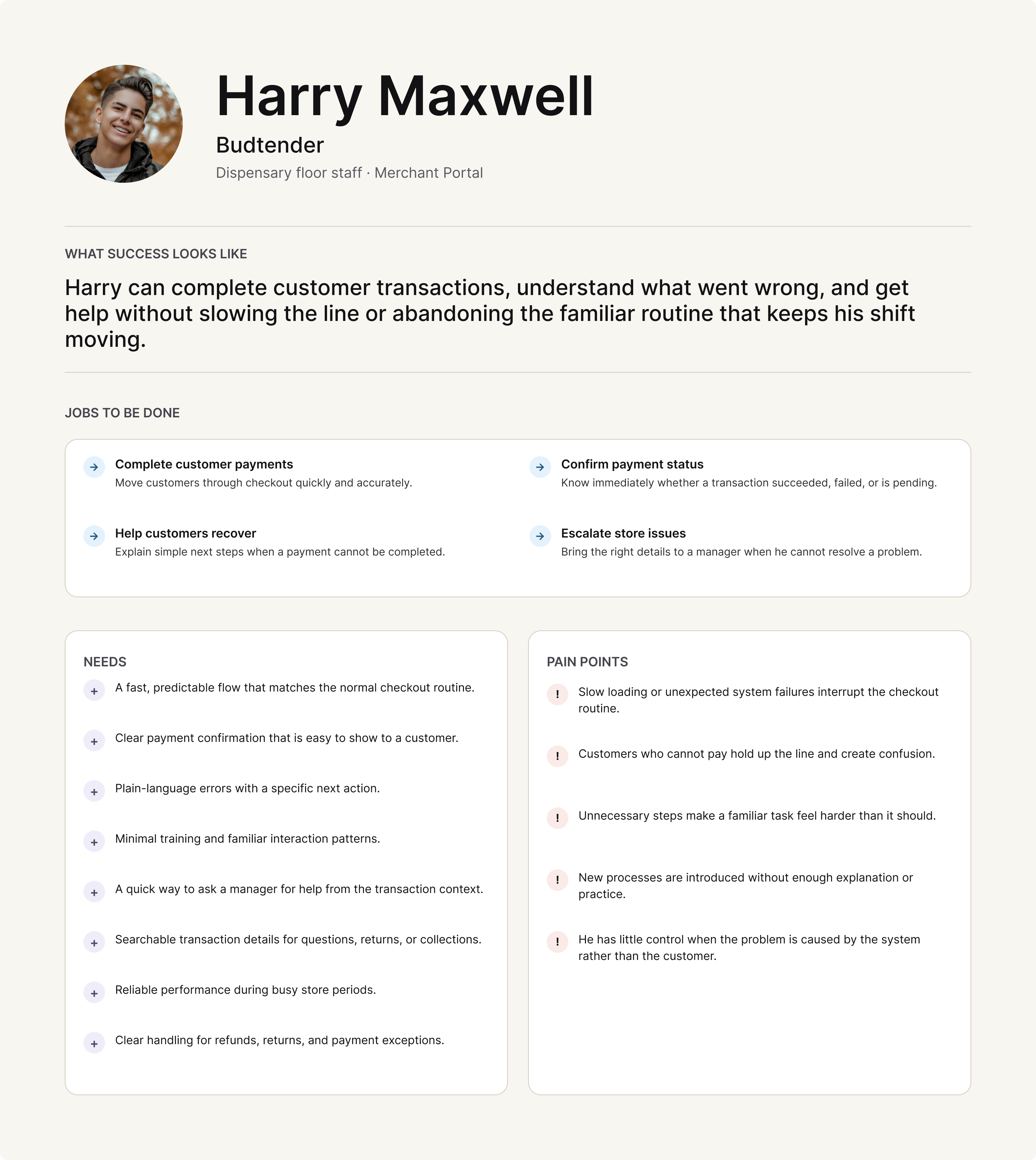
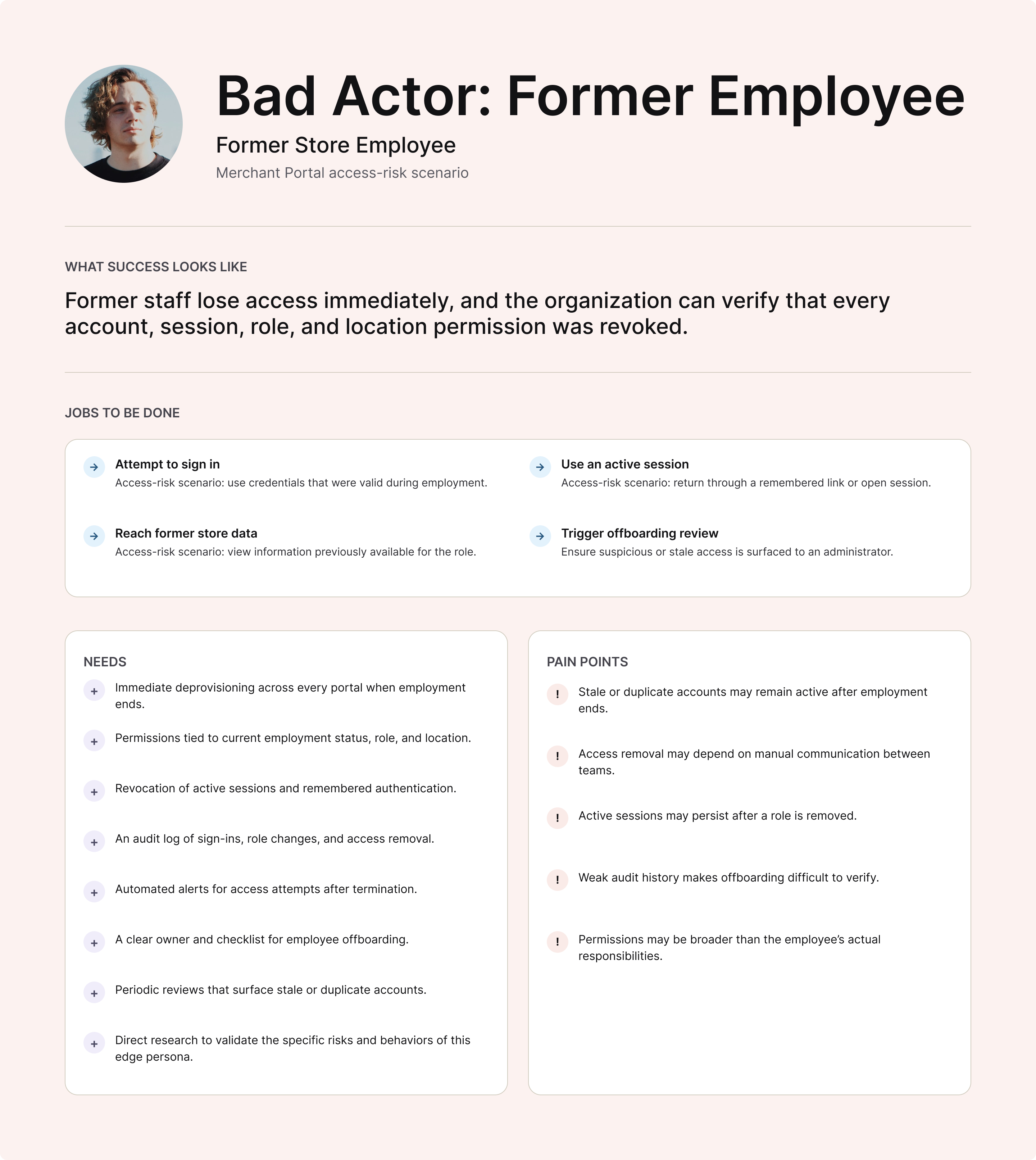
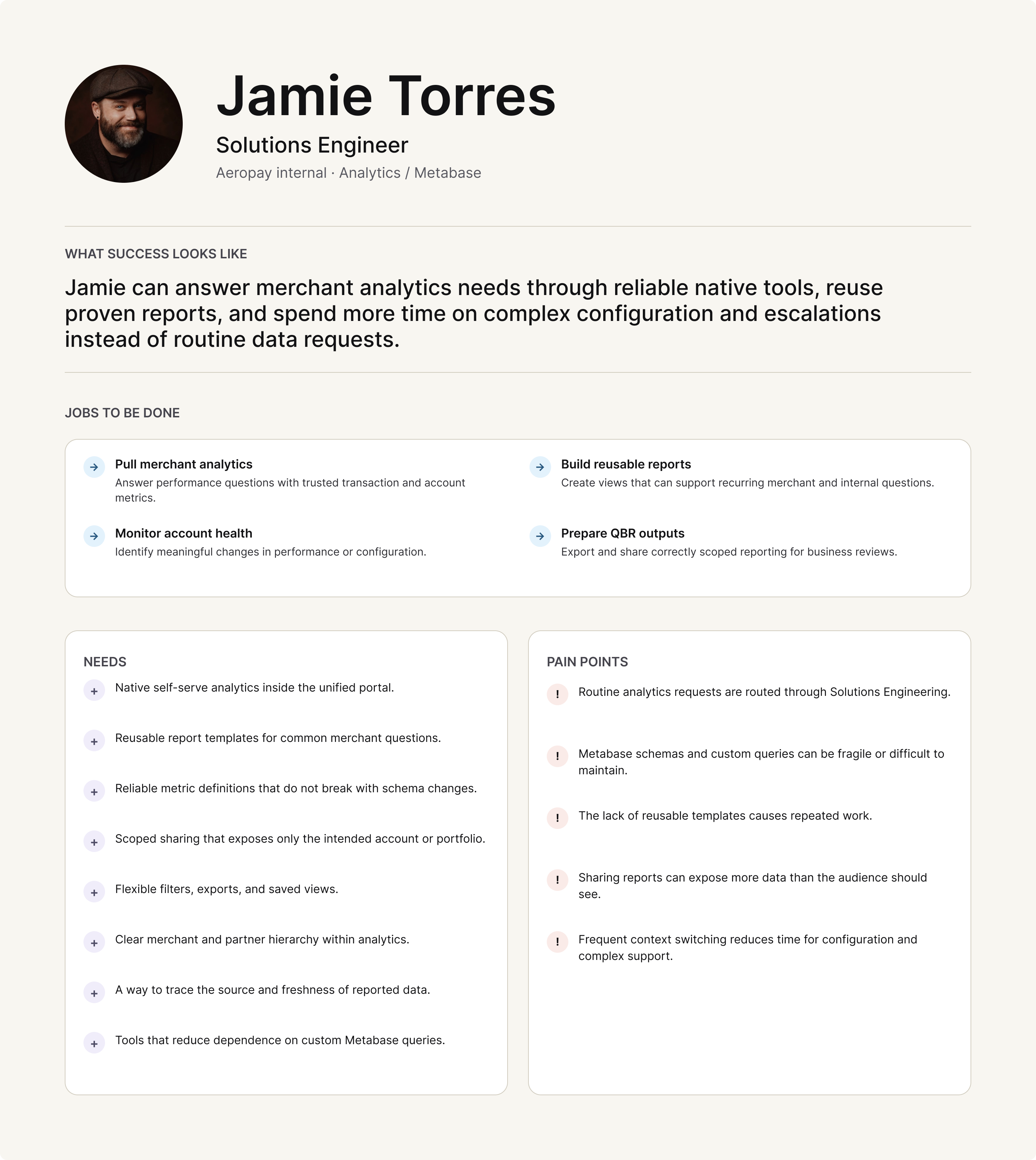
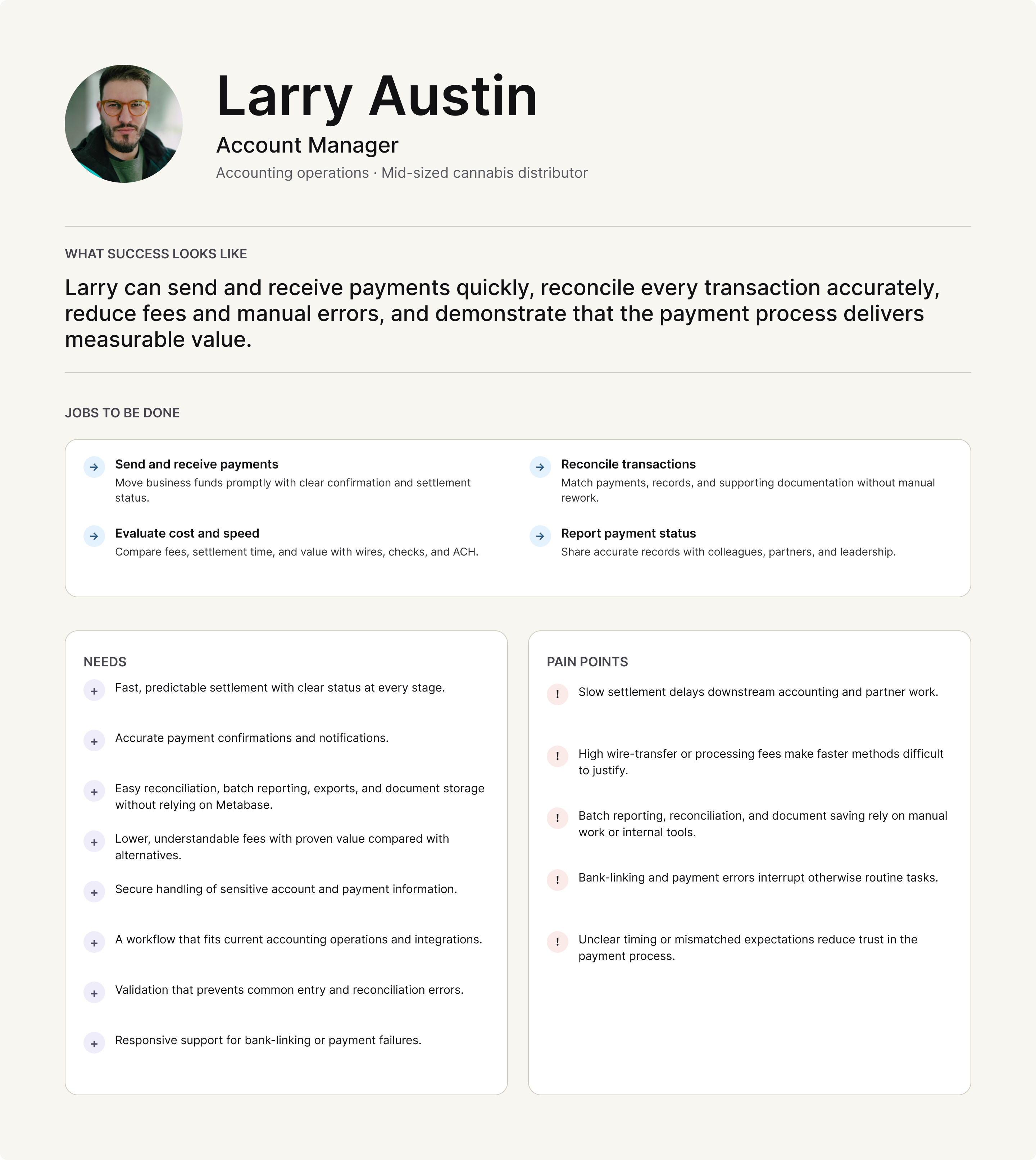
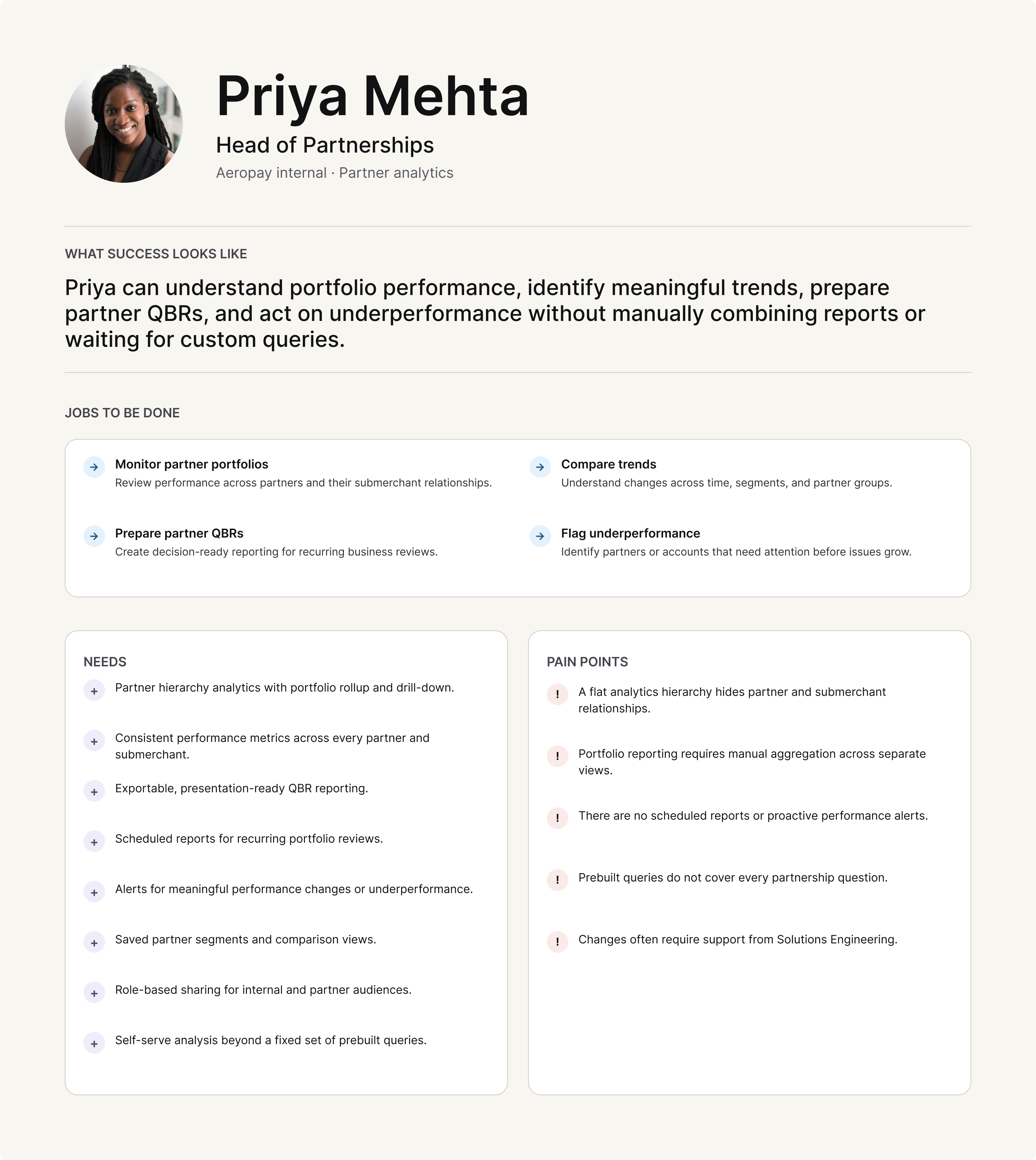
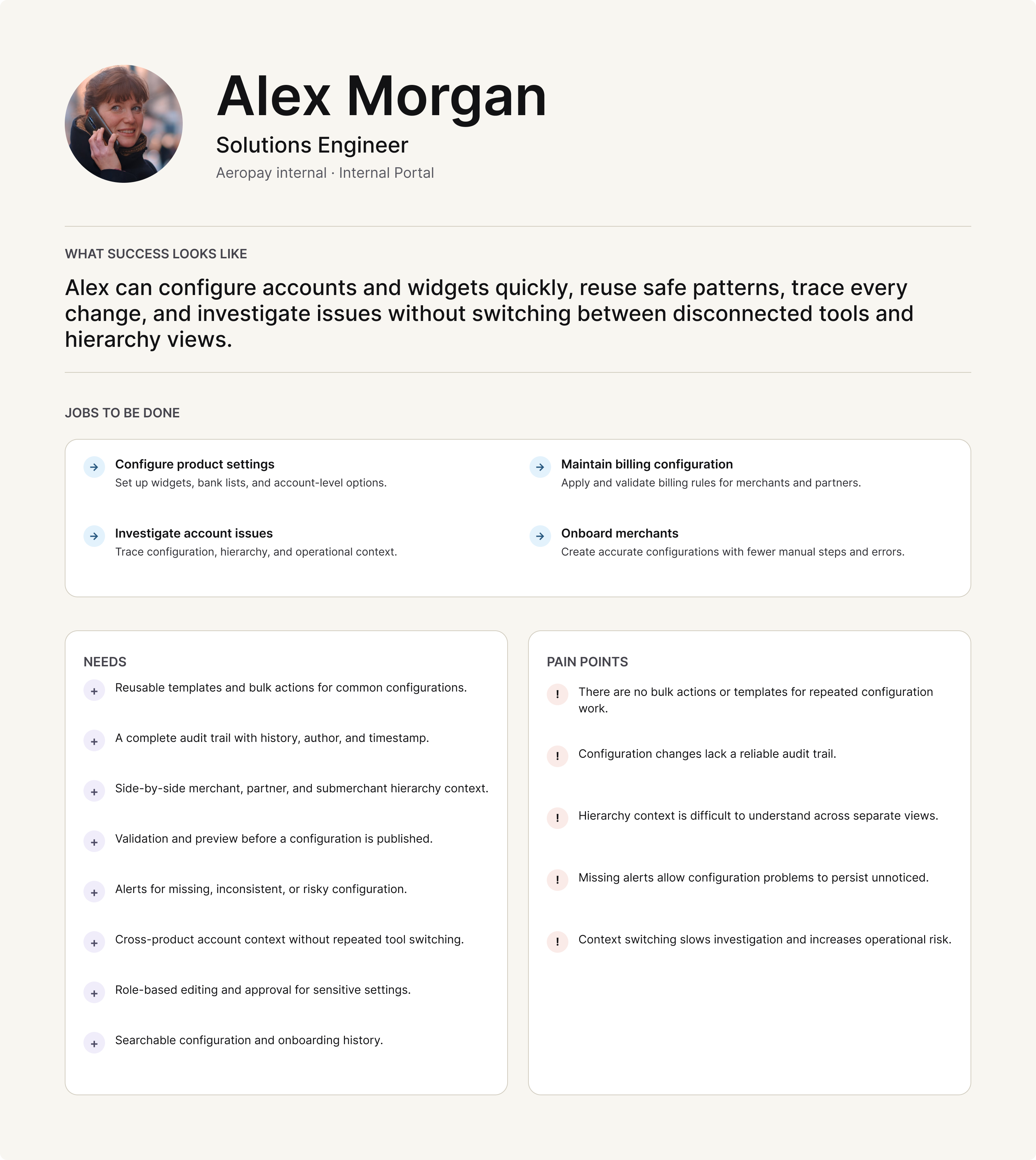
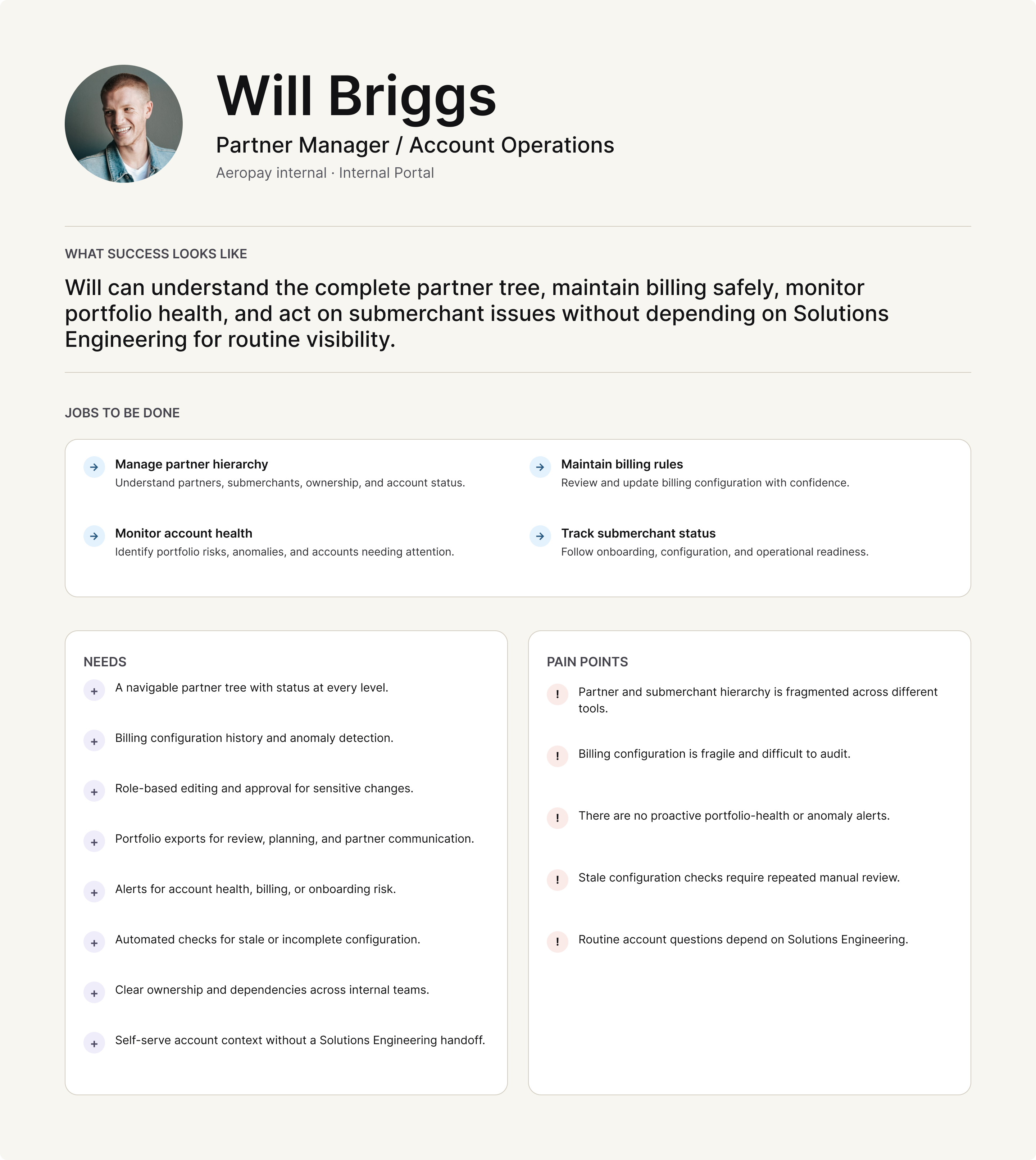
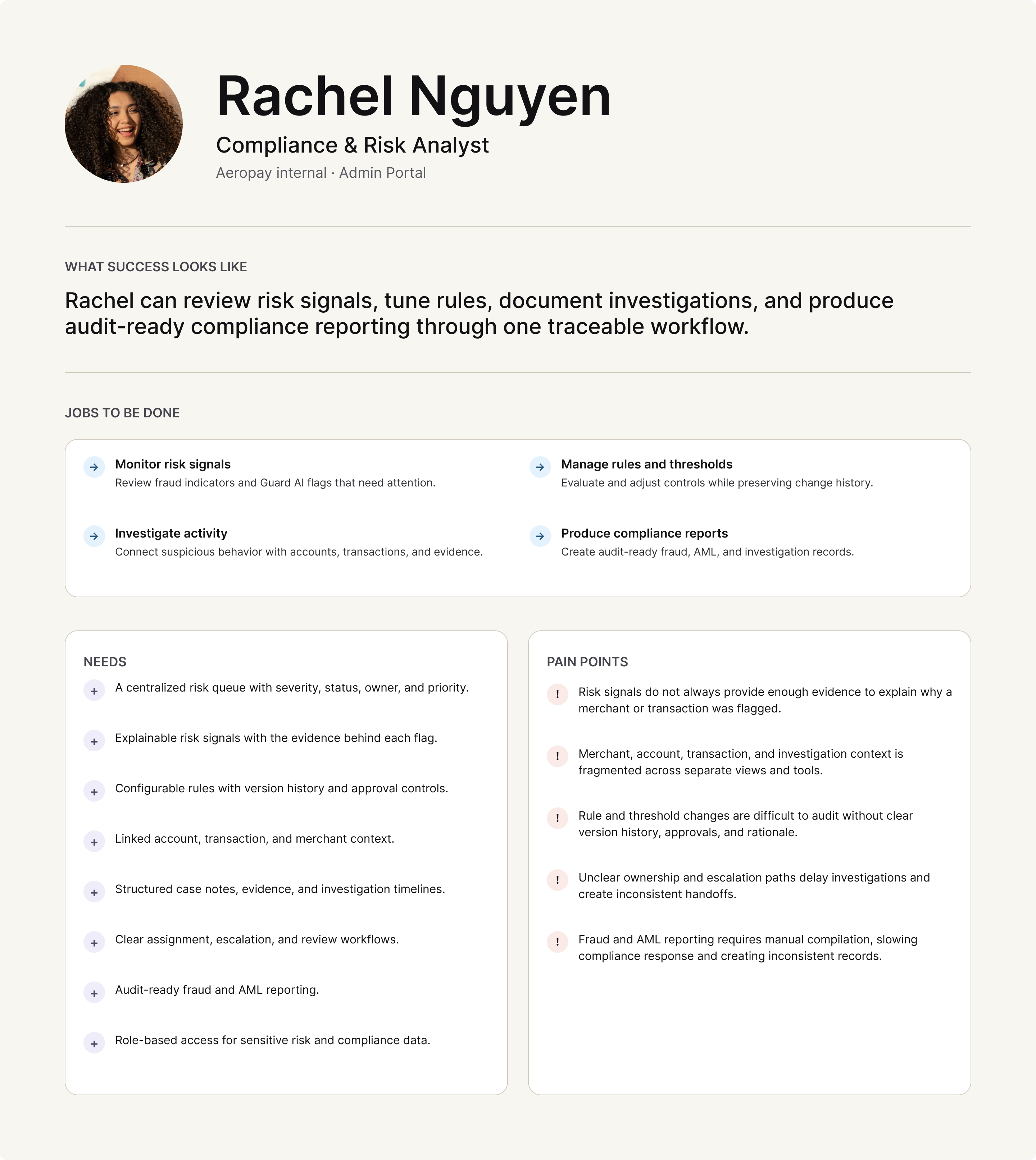
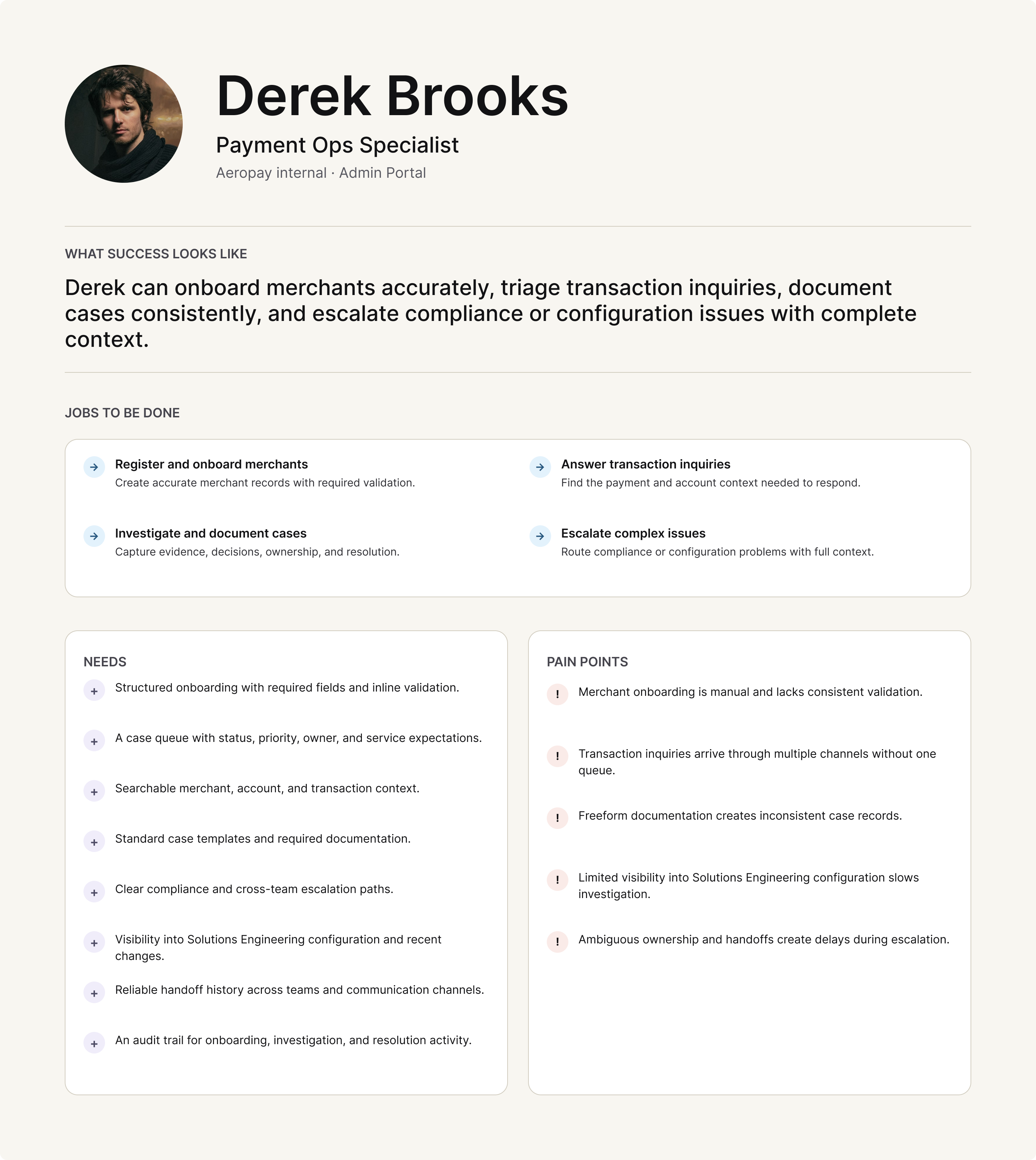
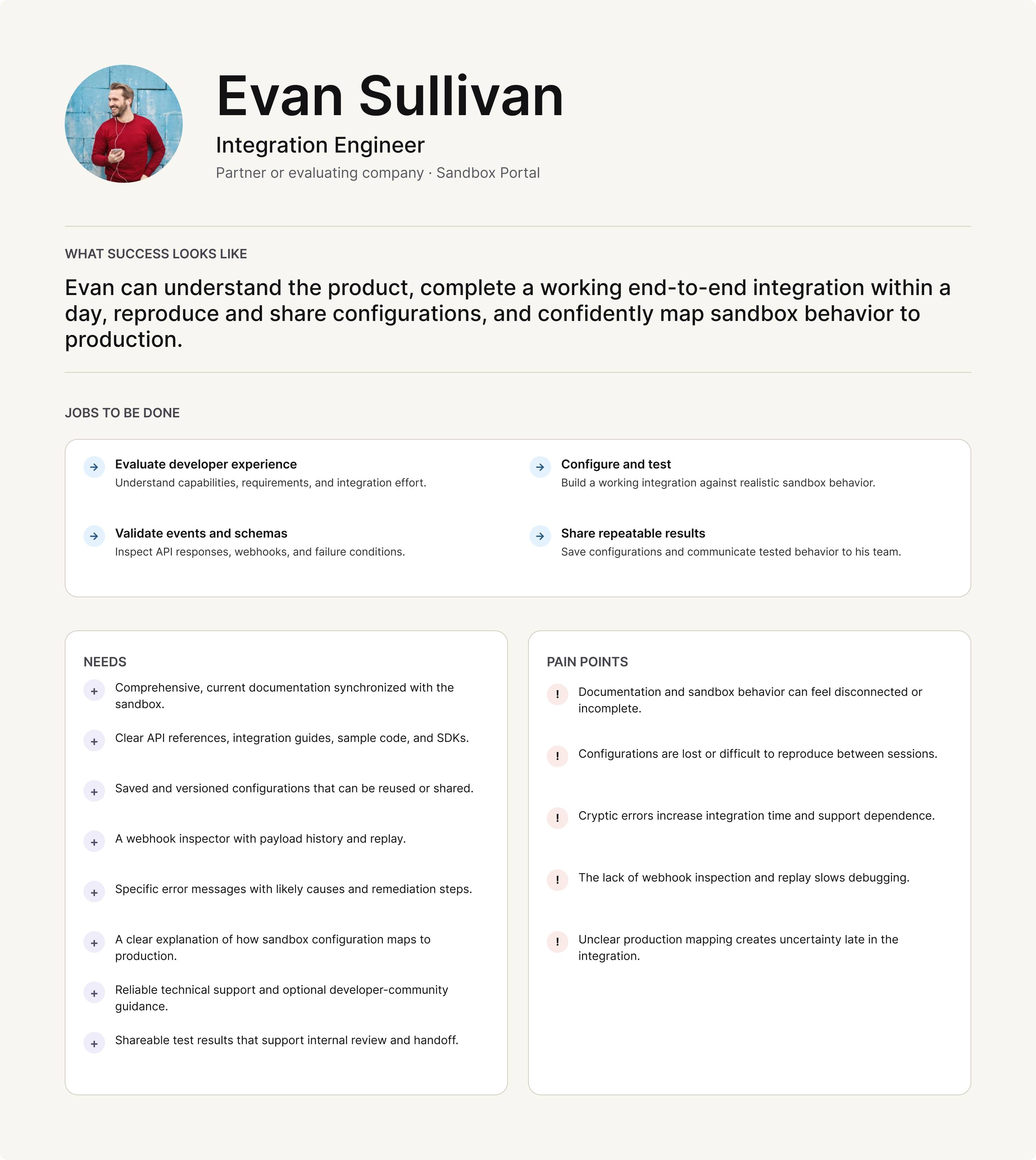
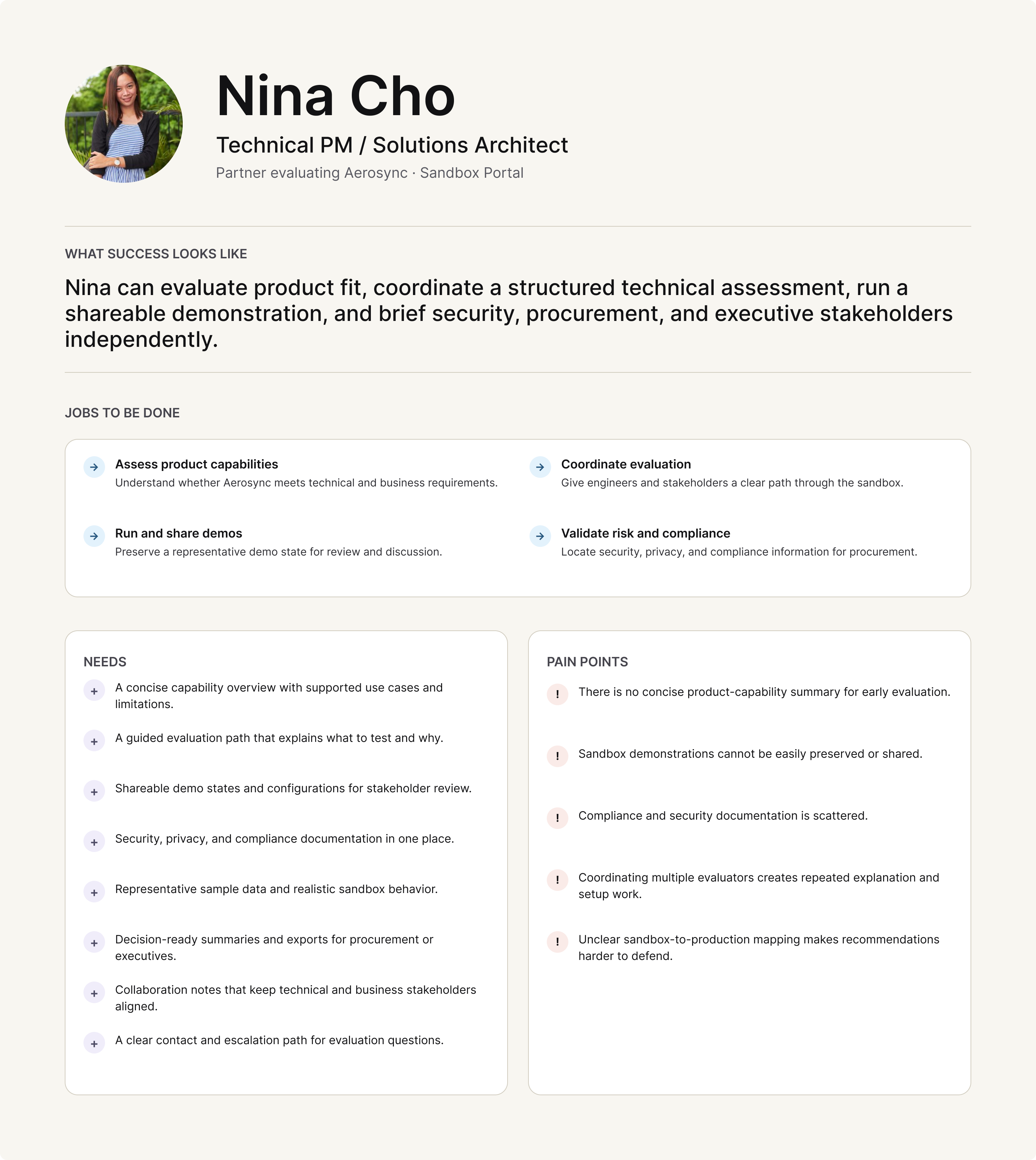
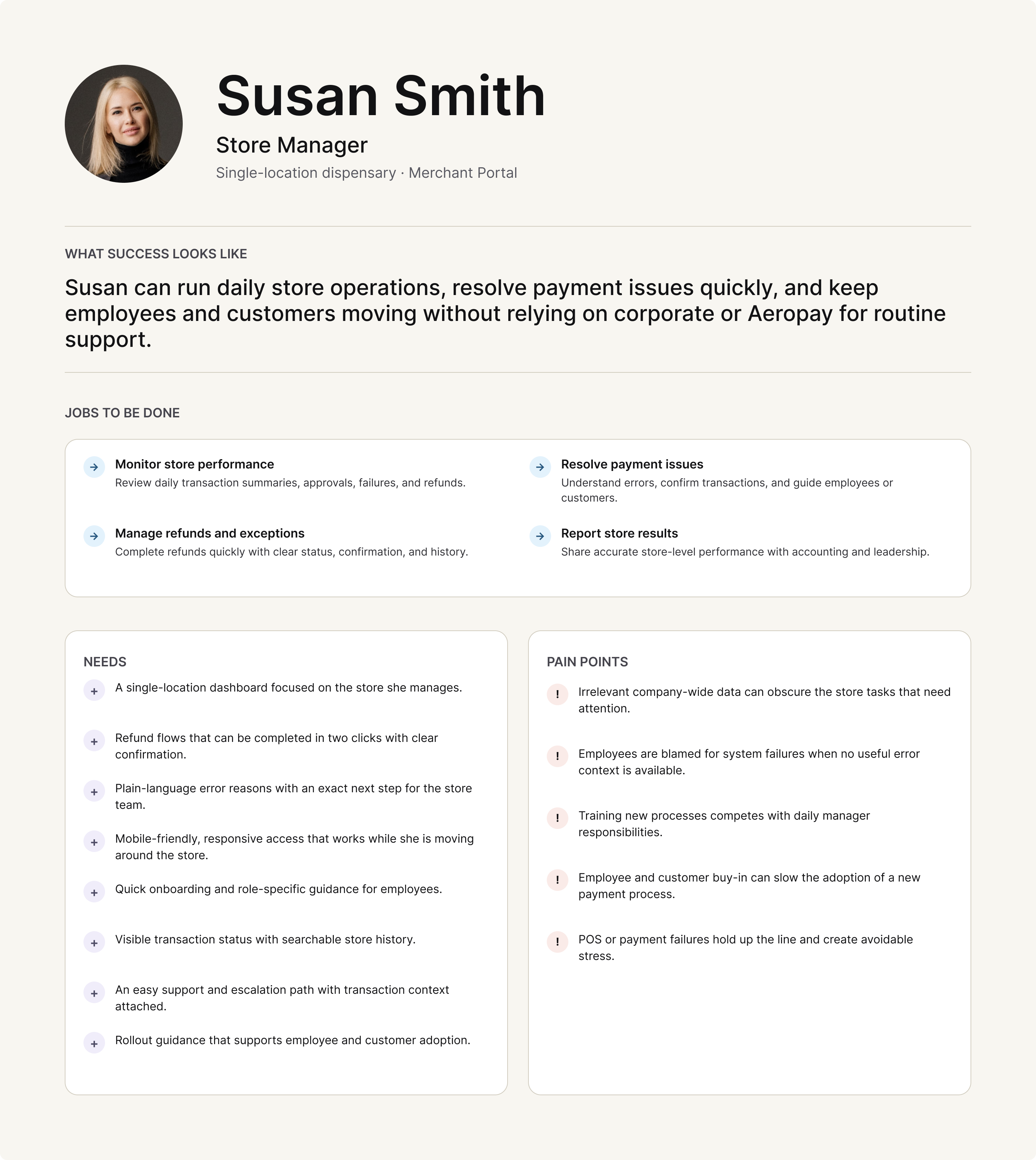
I designed a shared platform experience for merchant-facing and internal workflows, with common navigation, a consistent product shell, and role-based access. The experience adapts to each user’s responsibilities and account context rather than forcing everyone through the same workflow.
A separate initiative, Universal Merchant, was redefining Aeropay’s merchant hierarchy model. The navigation needed to support different levels of complexity without forcing every merchant into the same shape. A single-location merchant and a multi-brand partner should both feel like the system was designed for them.
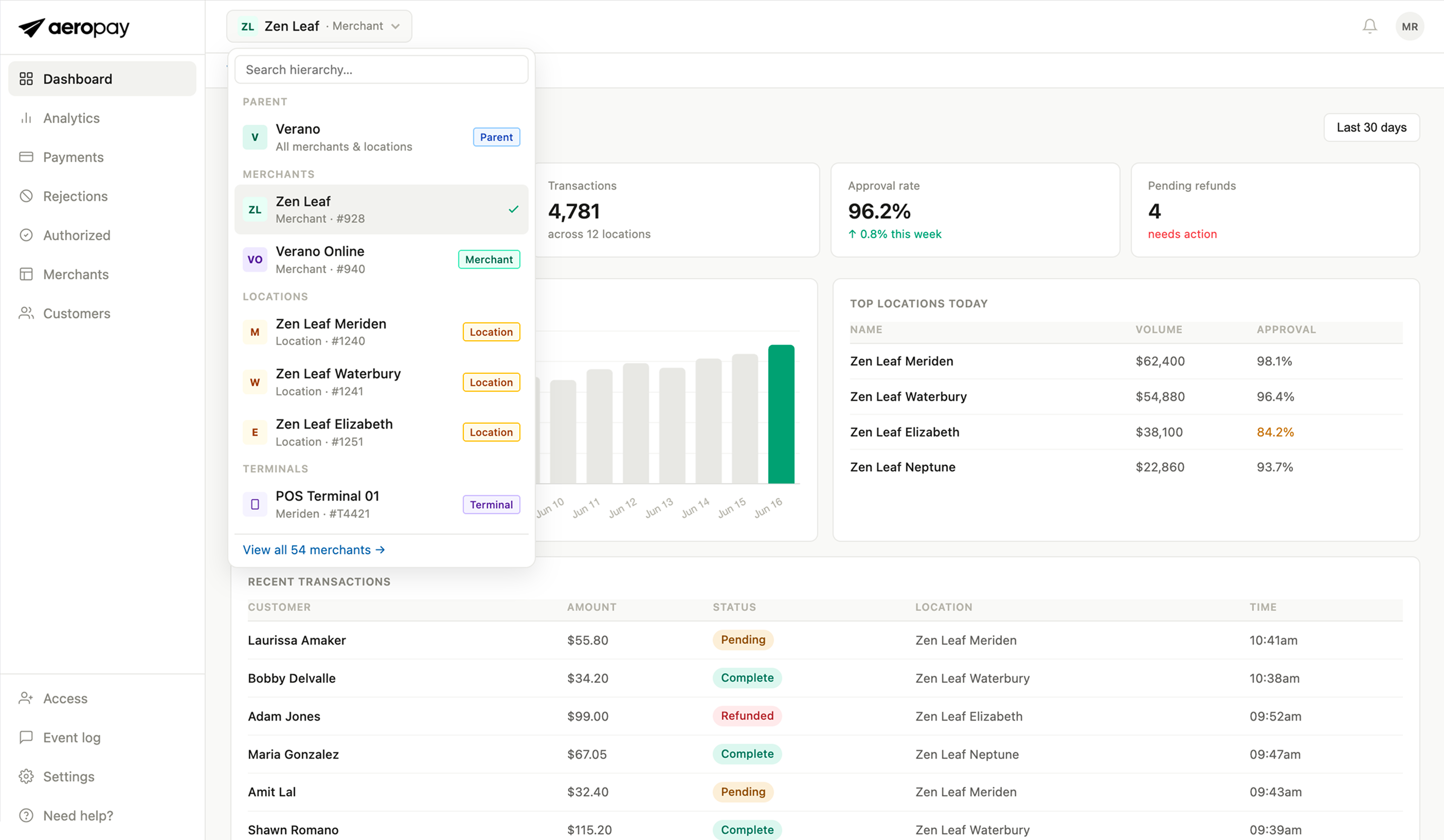
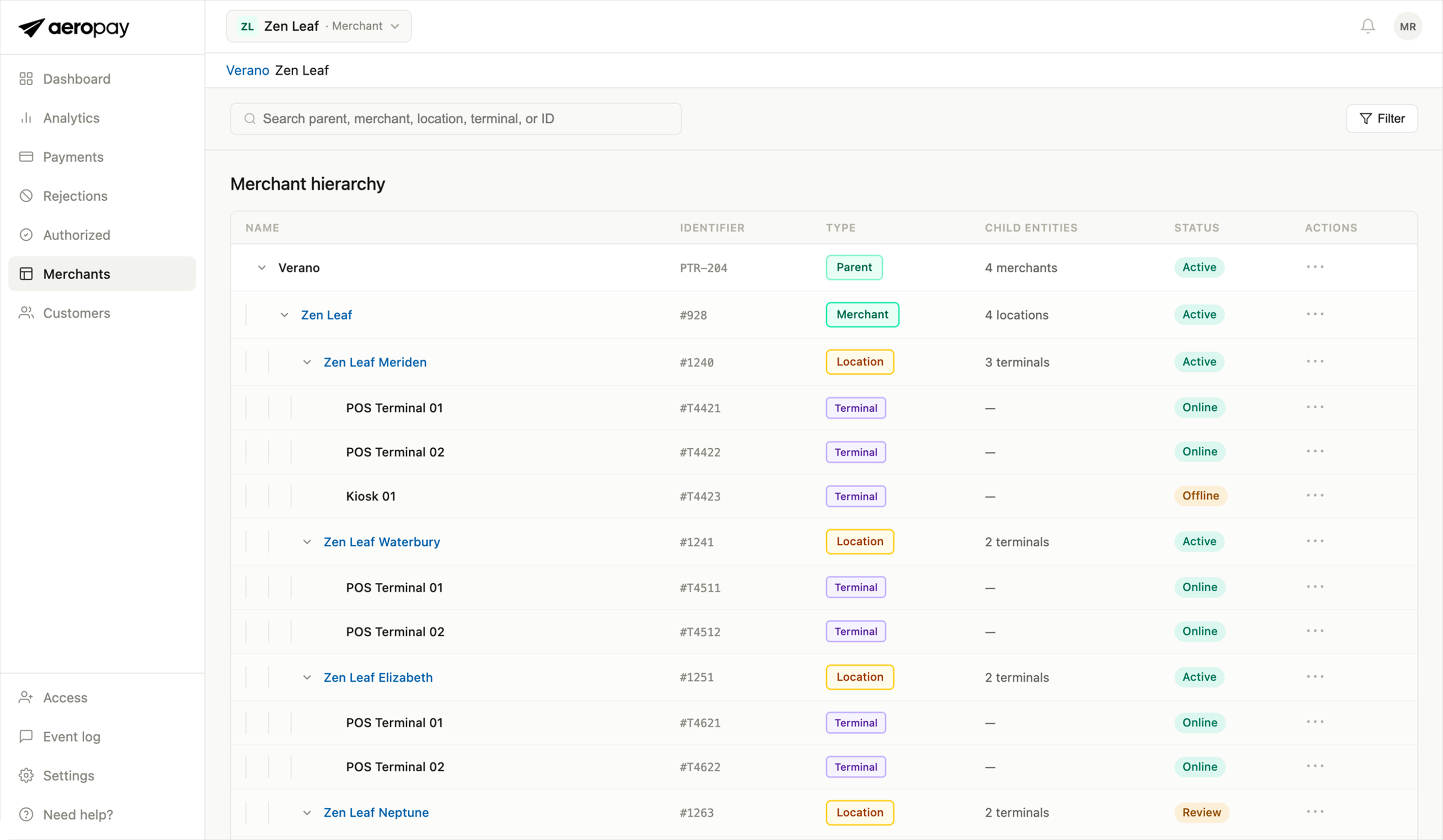
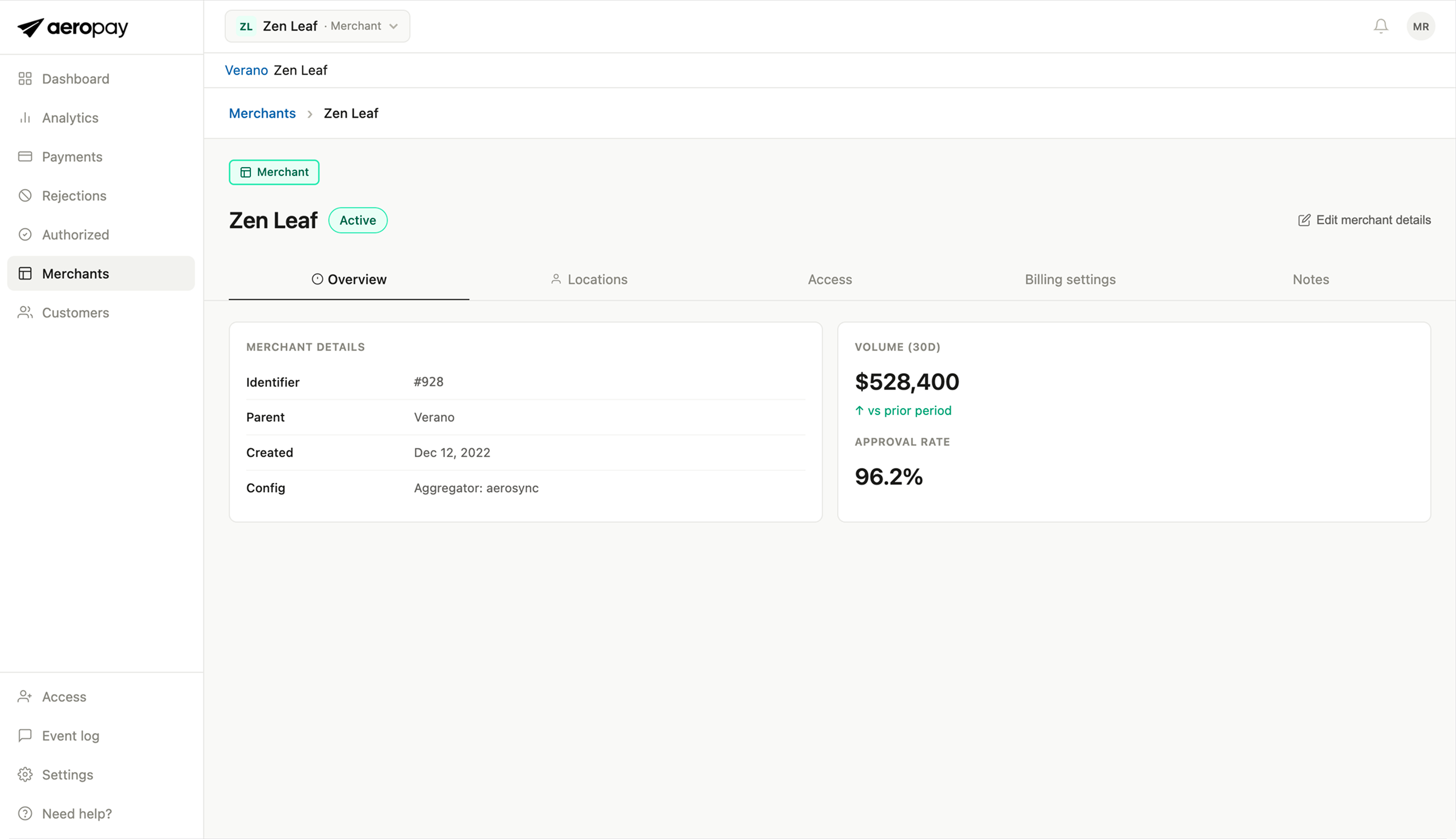
Native merchant analytics moved forward while the broader platform developed in phases. We introduced reporting directly into the existing Merchant Portal, giving clients self-service access to performance data without relying on manual requests.
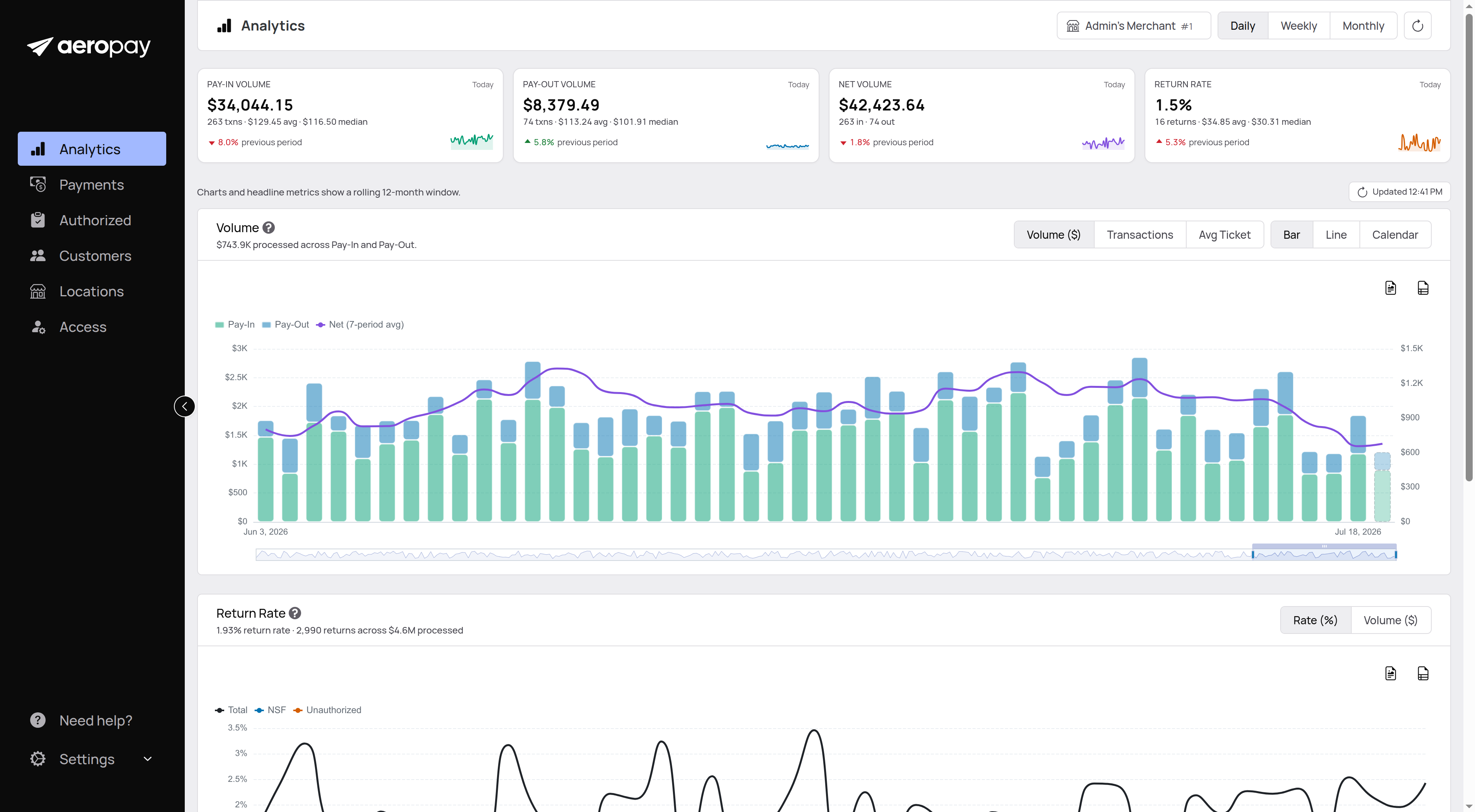
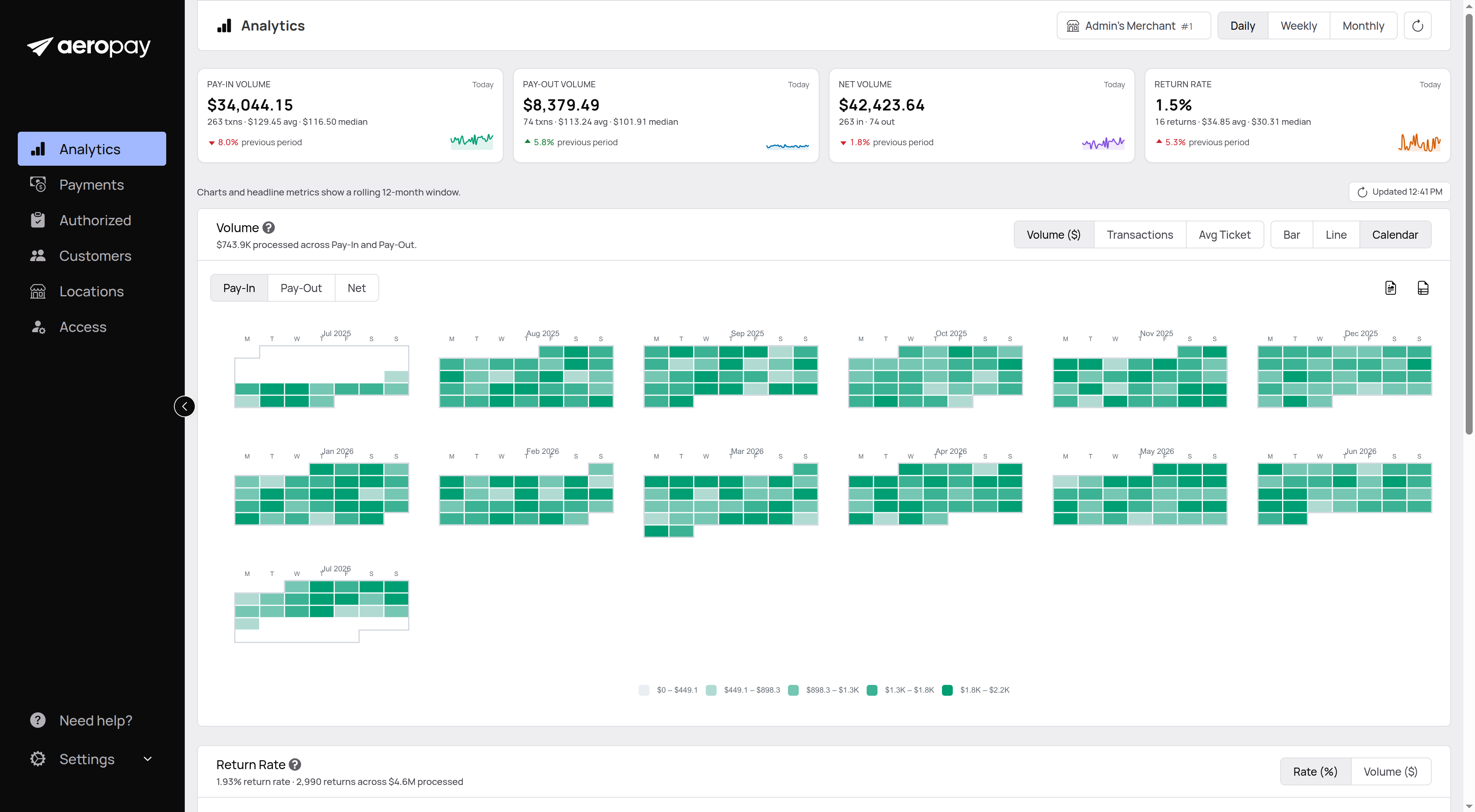
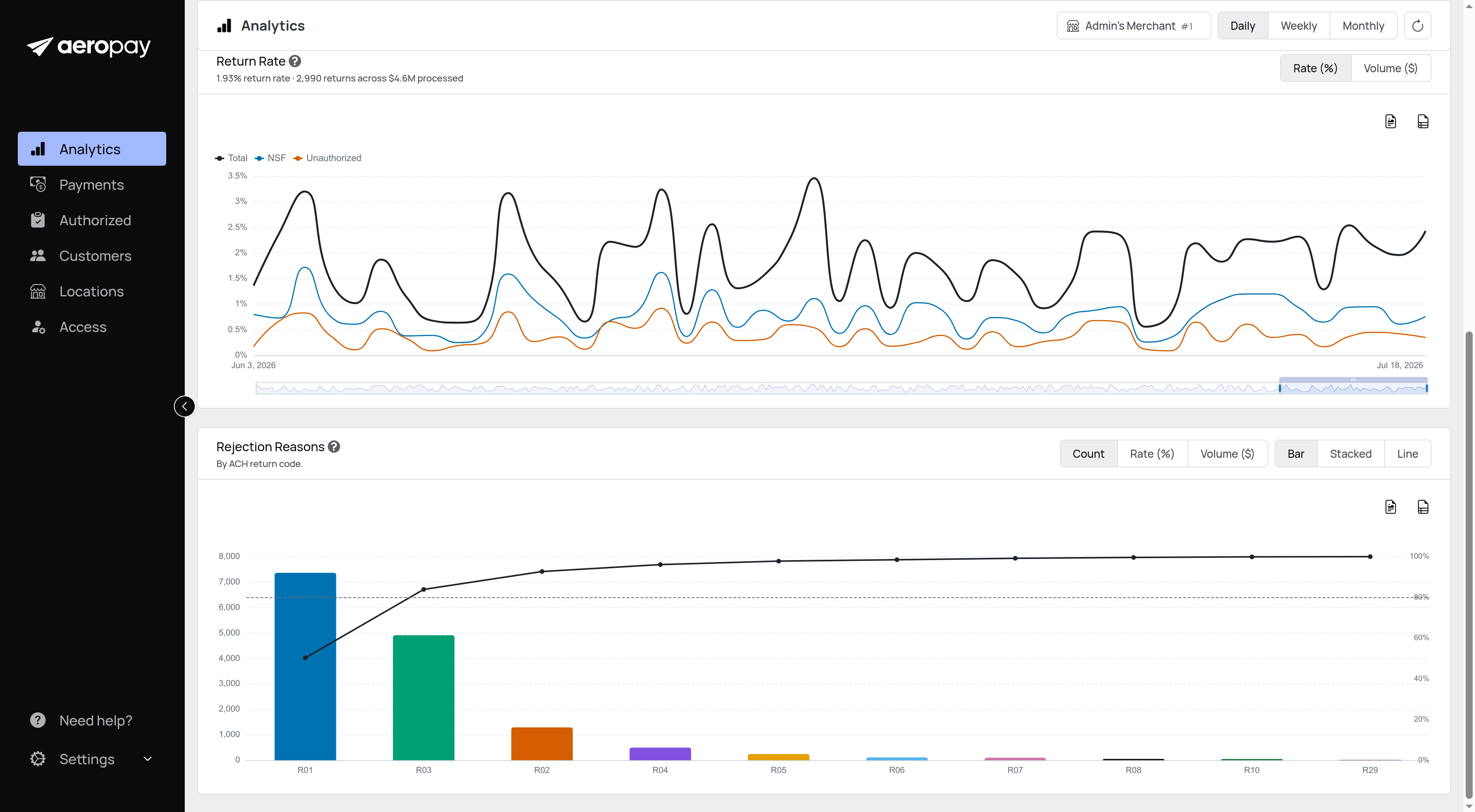
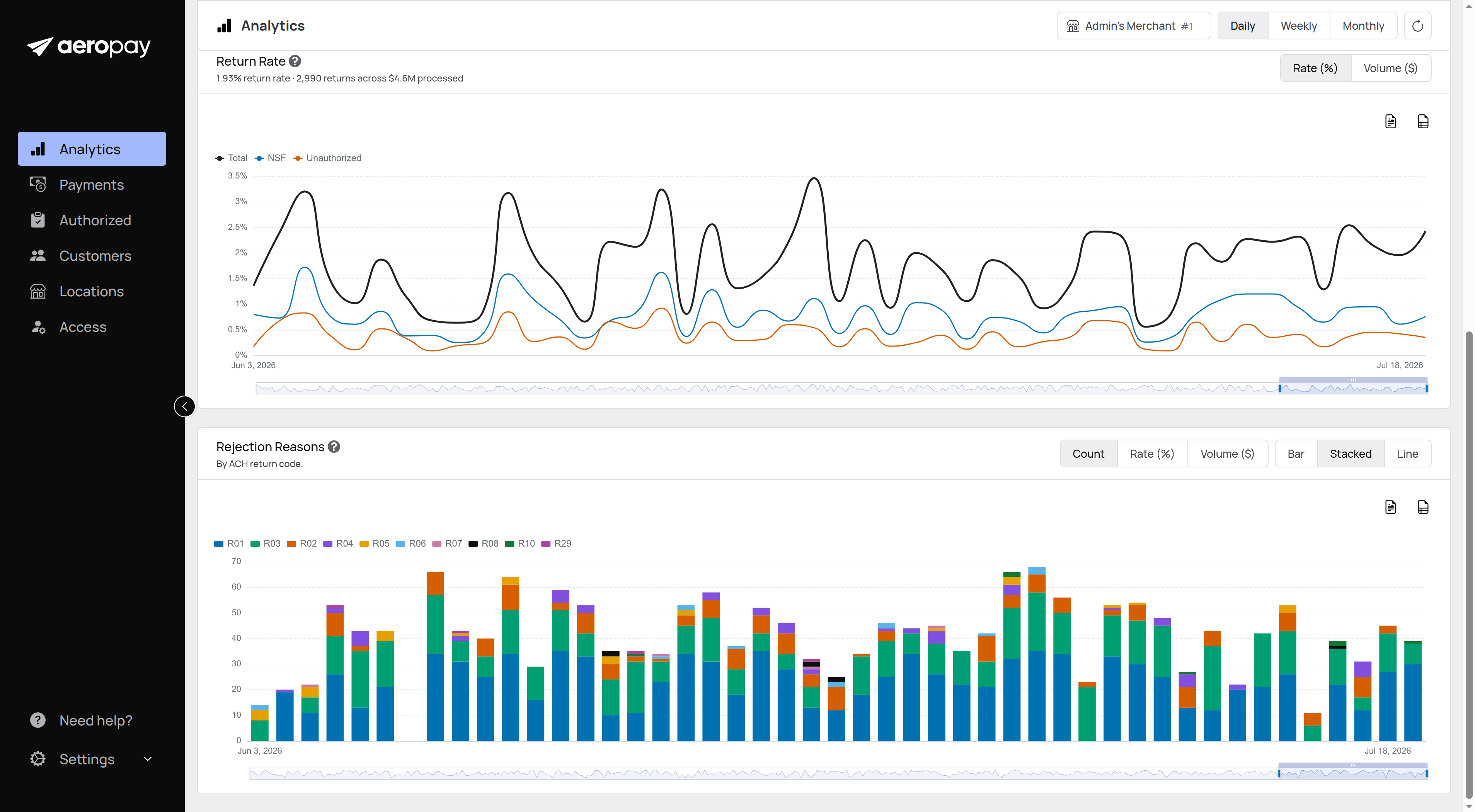
Operational efficiency. Native analytics gave partners direct access to reporting, eliminating manual report fulfillment for the Analytics team and reducing handoffs through Support and Partnerships.
Platform scalability. The longstanding merchant hierarchy constraint was resolved, removing a major dependency that had occupied Engineering for months. The approved platform direction and clear roadmap support continued growth.
Business growth. The launched merchant-facing experience received immediate positive partner feedback. It gave Partnerships a more complete product to sell, helped secure major partnerships, and supported revenue growth.
Development continues in phases, including the remaining Admin and internal Aerosync management experiences.